
Why Maintenance Budgeting Fails

Photo by Kate Ibragimova on Unsplash
Most landlord financial models fail not because rental income is overestimated but because maintenance and repair costs are systematically underestimated. The temptation to treat rental income as net income — ignoring maintenance as an irregular, unpredictable cost — is one of the most common errors in property investment.
Maintenance costs are not irregular: they are structurally certain over any sufficiently long period. A property that has not had its boiler replaced in fifteen years will need one. A property with original 1970s electrics will eventually require a full rewire. The uncertainty is timing, not occurrence. Budgeting that treats maintenance as an optional line item until something breaks is reactive financial management that leaves landlords exposed to cash flow shocks.
Building a Maintenance Reserve

Photo by Andre Taissin on Unsplash
A maintenance reserve is a sum set aside monthly from rental income specifically to fund future repair and replacement costs. The key parameters:
Monthly contribution rate: The 1% rule (1% of property value per year) provides a starting baseline. A £200,000 property implies a £2,000 annual reserve, or £167 per month. This should be adjusted upward for older properties, those with complex systems, or where inspection has identified pending issues.
Segregation: The reserve should be held in a separate bank account, distinct from operating funds and personal finances. This prevents the money from being spent on non-maintenance items, makes the reserve visible, and creates a clear audit trail.
Accumulation and drawdown: In the early years of ownership, contributions accumulate. When a major repair occurs (boiler replacement, roof repair), the reserve is drawn down. The goal is not a fixed balance but a self-replenishing fund that prevents any single repair from creating a cash flow crisis.
Capital Expenditure vs Revenue Maintenance
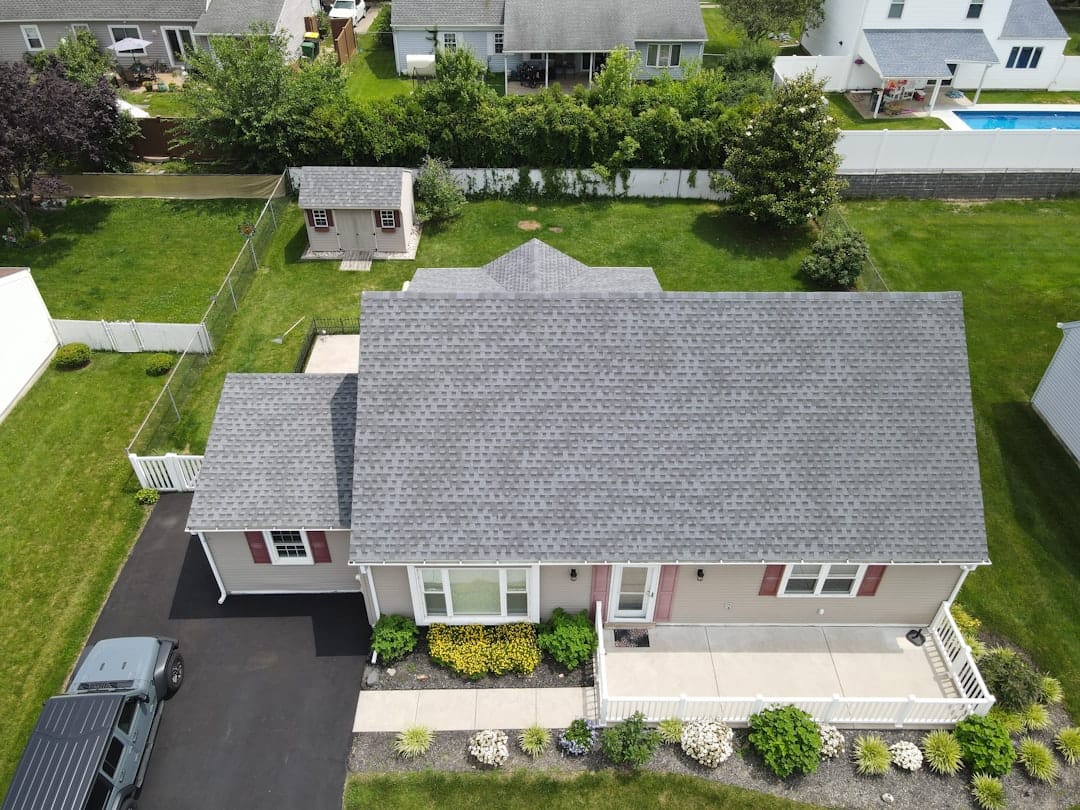
Photo by Paragon Exterior on Unsplash
Tax treatment in the UK distinguishes between:
Revenue maintenance (allowable as a deduction against rental income): repairs and like-for-like replacements that restore the property to its previous condition. Replacing a broken boiler with a similar model; repainting; fixing a leaking roof.
Capital expenditure (not immediately deductible but recorded as part of acquisition costs, reducing CGT liability on disposal): improvements that add value or extend the property's useful life. Converting a loft, adding an extension, upgrading a kitchen to a materially higher specification.
The distinction is not always clear-cut and can be contested by HMRC. The practical guidance: if you are restoring something to what it was, it is likely revenue. If you are making it materially better than it was, it is likely capital. When in doubt, record clearly and take professional advice.
Planning for Major Expenditure

Photo by Vitaly Gariev on Unsplash
Beyond routine maintenance, properties have predictable major capital replacement cycles. A landlord who knows their boiler is twelve years old should begin planning financially for replacement in the next few years, not be surprised when it fails in January.
A simple capital expenditure register lists major components, estimated age or installation date, expected lifespan, and projected replacement cost. This forward-looking view prevents the cash flow shock of multiple capital items falling due simultaneously and allows the reserve to be sized appropriately.
Key components to track: boiler (15–20 year lifespan), roof (30–50 years depending on material), electrics (rewire typically needed every 25–30 years in older properties), windows (double glazing typically 20–25 years), kitchen and bathroom (functional life varies widely, but 15–20 years before full replacement is common).