
Why Gold Is Different
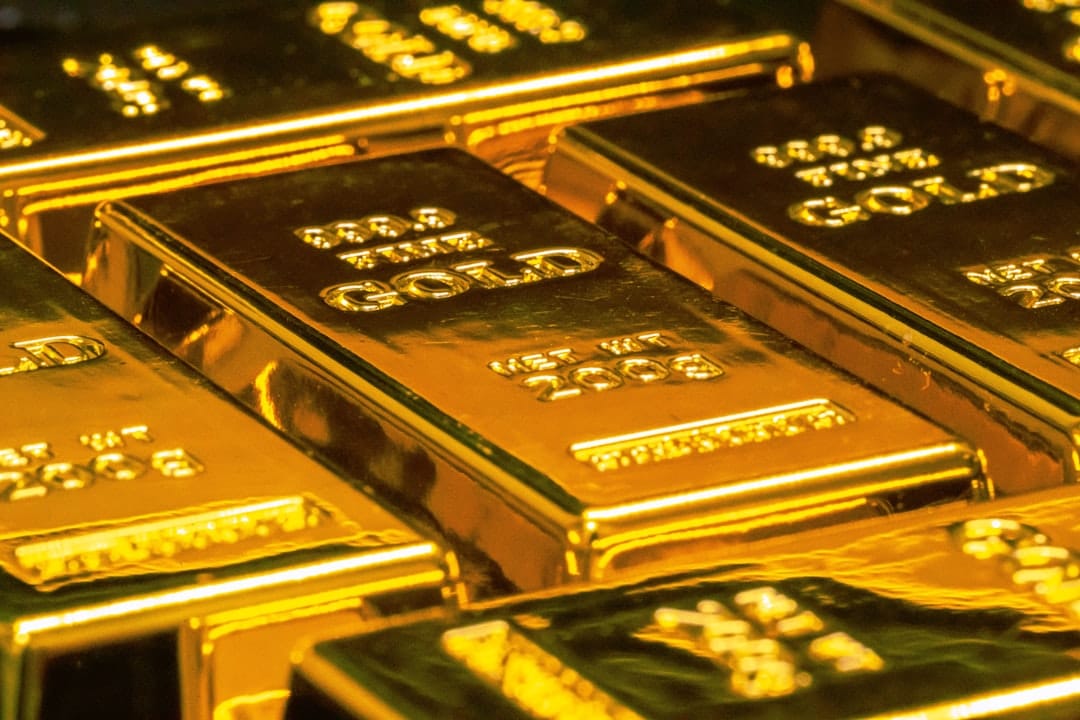
Photo by Jingming Pan on Unsplash
Gold is unlike any other commodity. It is barely consumed: almost all the gold ever mined in human history still exists in some form above ground. While a barrel of oil is burned, a tonne of copper becomes part of a building's wiring, and wheat is eaten, gold is hoarded — melted down, re-refined, and held as jewellery, coins, or bars across millennia. This durability is one reason gold has functioned as money across so many different cultures and civilisations.
The physical characteristics that made gold ideal as money are well understood: durable (it does not rust or corrode), divisible (it can be subdivided without losing value per unit weight), portable (high value per unit weight), and scarce (cannot be manufactured; new supply is constrained by the difficulty of mining). The total stock of gold ever mined is estimated at approximately 200,000 tonnes, with new mine production adding roughly 3,000 to 3,500 tonnes per year — an annual supply growth of approximately 1.5%. This is among the lowest of any commodity and is a key reason gold has maintained purchasing power over very long periods.
The Gold Standard and Bretton Woods
Photo by Dan Dennis on Unsplash
For most of the nineteenth and early twentieth centuries, major economies operated on the Gold Standard: currencies were convertible into gold at fixed rates, and the money supply was constrained by the gold reserves held by central banks. This provided exchange rate stability and a natural limit on government spending and money creation, but also made economies vulnerable to deflationary spirals when gold supply failed to grow as fast as the economy.
After World War II, the Bretton Woods system (established in 1944) created a modified gold standard in which the US dollar was convertible into gold at $35 per ounce, and other currencies were pegged to the dollar. The US commitment to gold convertibility anchored the global monetary system. As the post-war US economy expanded and dollars flooded the world, however, the US gold reserves relative to outstanding dollar claims became increasingly strained.
On August 15, 1971, President Richard Nixon suspended gold convertibility — "closing the gold window" — effectively ending Bretton Woods and launching the era of fiat currency: money backed by government decree rather than a physical commodity. This decision fundamentally changed gold's role in the global financial system.
Gold in the Post-Bretton Woods Era
After 1971, gold was no longer money in any formal sense. Yet central banks continued to hold it, investors continued to seek it in times of crisis, and its price continued to respond to inflation, geopolitical stress, and changes in real interest rates.
Claude Erb and Campbell Harvey (Duke University) explored gold's long-run properties in their 2013 paper "The Golden Dilemma" (Financial Analysts Journal). Their central finding was nuanced: gold does maintain purchasing power over very long periods — centuries — but with enormous volatility in between. Over shorter periods of decades, gold can dramatically underperform or overperform against inflation, making it an unreliable short-term inflation hedge despite its long-run track record.
Gold's correlation to other assets is typically near-zero to mildly negative relative to equities. This correlation tends to become most negative — meaning gold rises when equities fall most sharply — precisely in crisis periods, giving gold its reputation as a "crisis hedge" or a measure of financial fear. Central banks globally hold gold as a reserve asset precisely for this diversification property: it tends to retain value when the financial system is under stress.
The Income Problem

Photo by Towfiqu barbhuiya on Unsplash
Gold produces no income. It pays no dividend, no coupon, no rent. This is the basis of Warren Buffett's famous critique of gold as an investment: a pile of gold simply sits there, whereas a productive business generates earnings, reinvests, grows, and compounds returns over time. In an environment where equities and bonds offer attractive real returns, gold's zero yield is a meaningful opportunity cost.
The practical consequence is that real interest rates are the primary financial driver of gold prices. When real interest rates (nominal rates minus inflation) are low or negative, the opportunity cost of holding gold is minimal — investors give up little by holding a non-yielding asset. When real rates are high, the opportunity cost of gold rises, and capital flows toward interest-bearing alternatives. This is why gold prices rose sharply in the low-real-rate environment of 2020-2021 and came under pressure when real rates rose in 2022-2023.