
A Universal Pattern of Under-Diversification

Photo by Invest Europe on Unsplash
Home bias is the well-documented tendency of investors to hold a far greater proportion of their portfolios in their domestic stock market than would be justified by that market's share of global equity capitalisation. It is one of the clearest examples of irrational portfolio construction — persistent, universal across countries, and costly.
The numbers make the distortion stark. The United States represents approximately 60% of total global equity market capitalisation. Yet the average American retail investor holds 70–80% of their equity portfolio in US stocks. British investors hold a similar UK overweight despite the UK accounting for around 4% of global market cap. Japanese investors hold large Japan overweights. French investors overweight France. In every country studied, domestic investors dramatically overweight their home market relative to what global diversification would prescribe.
Why Home Bias Is Harmful

Photo by Maxim Hopman on Unsplash
The case for global diversification is straightforward: different equity markets have imperfect return correlations, so holding a global portfolio reduces portfolio volatility relative to a single-country portfolio offering the same expected return. International markets provide exposure to industries, growth rates, and economic cycles not available domestically. A British investor who holds mostly UK equities is concentrated in sectors like financials, energy, and mining, and has very limited exposure to US technology, Asian consumer growth, or European healthcare.
There is a deeper problem specific to equities: for most investors, their human capital — the present value of their future earnings — is already heavily tied to their domestic economy. If the UK economy deteriorates, both their job security and their UK-heavy portfolio suffer simultaneously. The rational response to this correlation is to diversify internationally, not double down on home-country exposure.
Why Home Bias Persists

Photo by Alexei Maridashvili on Unsplash
Despite the clear cost, home bias persists for several reasons. Familiarity: investors find domestic companies easier to understand and monitor, creating an illusion of reduced risk. Tax treatment: dividends from foreign companies are sometimes taxed more heavily in certain jurisdictions. Currency risk aversion: investors dislike the foreign exchange exposure embedded in overseas investments, even though over long periods currency effects tend to cancel out. And simple inertia: the domestic market is the default, and it takes deliberate action to diversify globally.
French and Poterba's 1991 paper "Investor Diversification and International Equity Markets" documented the phenomenon formally. They calculated that US investors implicitly placed 3.5 times more weight on US equities than a pure market-cap-weighted world portfolio would suggest — revealing a striking implicit belief that the home market would massively outperform, which is rarely justified.
The Fix
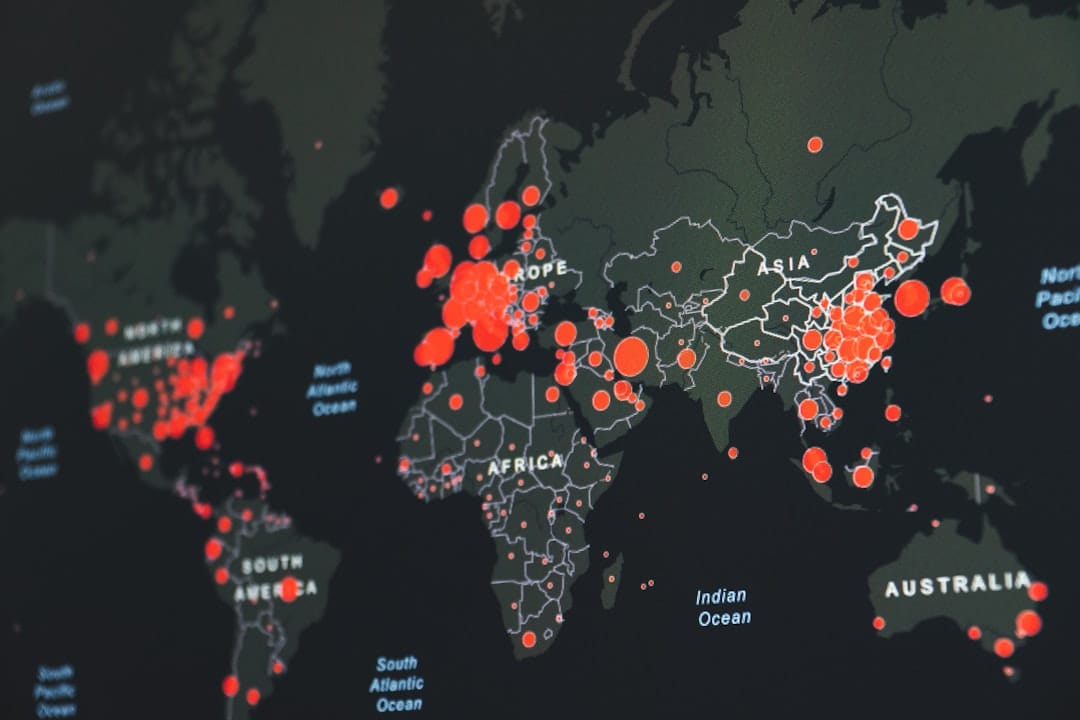
Photo by Martin Sanchez on Unsplash
The practical corrective is straightforward: hold a globally diversified equity fund — a world index fund — rather than concentrating in the domestic market. This single change eliminates home bias and provides exposure to the full breadth of global economic activity.