Finance Brain
Courses
Sign in
← Back to decks
Sign in to save your progress, vote, and build your own decks.Sign in

How Hitler Funded Rearmament
Germany in January 1933, when Hitler became Chancellor, was a country in deep economic crisis: six million unemployed, hyperinflation still fresh in living memory, reparations obligations, and severe restrictions on military expenditure under the Treaty of Versailles. Yet by September 1939…

4 cards
Study this deck

How Hitler Funded Rearmament

How Hitler Funded Rearmament

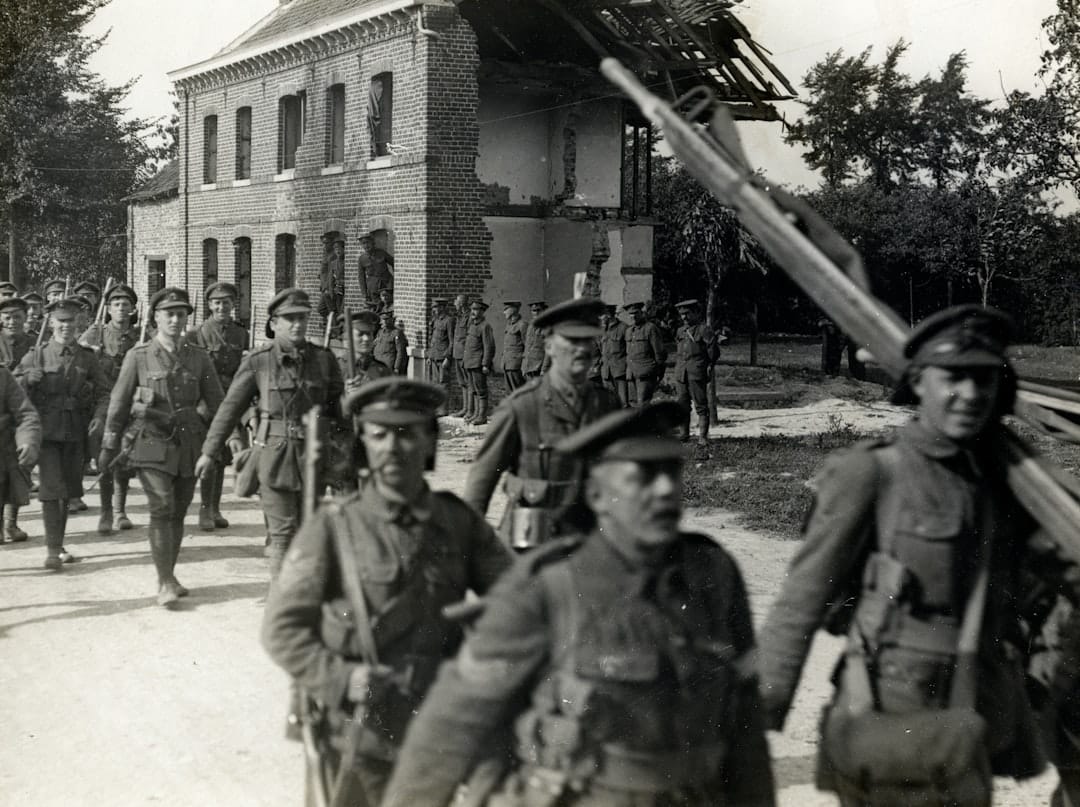
grayscale photography group of soldier walking outdoors

Photo by British Library on Unsplash

Germany in January 1933, when Hitler became Chancellor, was a country in deep economic crisis: six million unemployed, hyperinflation still fresh in living memory, reparations obligations, and severe restrictions on military expenditure under the Treaty of Versailles. Yet by September 1939, Germany possessed the most powerful military in Europe. How this transformation was financed — without producing a second hyperinflation and without triggering international financial detection — is one of the most studied cases in the history of wartime economic policy.

Hjalmar Schacht and the Mefo Bills

The architect of early Nazi rearmament financing was Hjalmar Schacht, appointed Reichsbank President in 1933. Schacht devised a mechanism that was simultaneously financially sophisticated and deeply deceptive: the Mefo bill (Metallurgische Forschungsgesellschaft — Metallurgical Research Company).

Mefo was a shell company established specifically to issue bills of exchange. The German government — specifically, the armaments manufacturers — would pay for rearmament with Mefo bills rather than cash. The manufacturers could then discount these bills at the Reichsbank for cash, or hold them as financial instruments. The bills were guaranteed by the government but did not appear on the government's official balance sheet. They were, in effect, secret government borrowing used to fund secret rearmament.

Between 1934 and 1938, approximately 12 billion Reichsmarks in Mefo bills were issued — financing the initial rearmament programme while keeping the deficit off the official books. Foreign creditors, dissuaded from looking too carefully, saw a Germany apparently managing its finances responsibly while unemployment fell and economic activity rose.

The Functioning Economy Illusion
a close up of an old fashioned typewriter

Photo by Markus Winkler on Unsplash

Schacht's genius was creating an appearance of normalcy while conducting a secret military buildup. Germany's nominal GDP grew strongly; unemployment fell from 6 million to near zero by 1938. These were real achievements, funded in significant part by the military spending that the Mefo mechanism concealed.

But the underlying economics were not sustainable. Schacht himself resigned in 1937 when he recognised that the rearmament pace had outrun any financially stable plan. His successor continued, funding an accelerating programme through increasingly explicit deficit financing and eventually through outright occupation and plunder of conquered territories.

Educational content only. Not financial, investment, tax or legal advice. Learn more

Quiz me on this
What was the primary purpose of the Mefo bill mechanism devised by Hjalmar Schacht?
  1. To create a domestic bond market that could attract foreign investment into German industry
  2. ✓ To finance rearmament through off-balance-sheet government obligations, concealing the scale of military spending from foreign creditors and Versailles treaty monitors
  3. To provide a currency substitute that would prevent a repeat of the Weimar hyperinflation
  4. To channel private industrial profits into government-controlled investment funds
Why did Hjalmar Schacht resign in 1937?
  1. He was arrested by the Gestapo for embezzlement of Mefo bill proceeds
  2. ✓ He recognised the pace of rearmament had outrun any financially sustainable plan and no longer had influence over economic policy
  3. He disagreed with Hitler's foreign policy objectives and resigned on political grounds
  4. He was replaced by a foreign policy adviser who believed fiscal policy should be subordinated to military strategy
How did the apparent economic success of Nazi Germany in 1933–1938 — falling unemployment, rising GDP — relate to the rearmament financing?
  1. It was genuinely independent: tax reforms and business deregulation drove growth before rearmament became the primary economic driver
  2. ✓ The appearance of success was partly real — military spending created employment and economic activity — but was funded through concealed deficit spending that stored up future financial problems
  3. The economic improvement was entirely statistical manipulation; actual economic conditions remained depressed throughout
  4. The improvement reflected Germany's recovery from the global Depression, which benefited all European economies similarly
How did Germany's financing strategy shift after Schacht's resignation?
  1. It returned to conventional deficit financing through publicly issued government bonds at market interest rates
  2. ✓ It moved toward increasingly explicit deficit financing and eventually the plunder of occupied territories
  3. It adopted a currency board arrangement with the US dollar to restore financial credibility
  4. It began accepting foreign direct investment in German industry as a substitute for government borrowing