
Sovereigns as the Risk-Free Benchmark
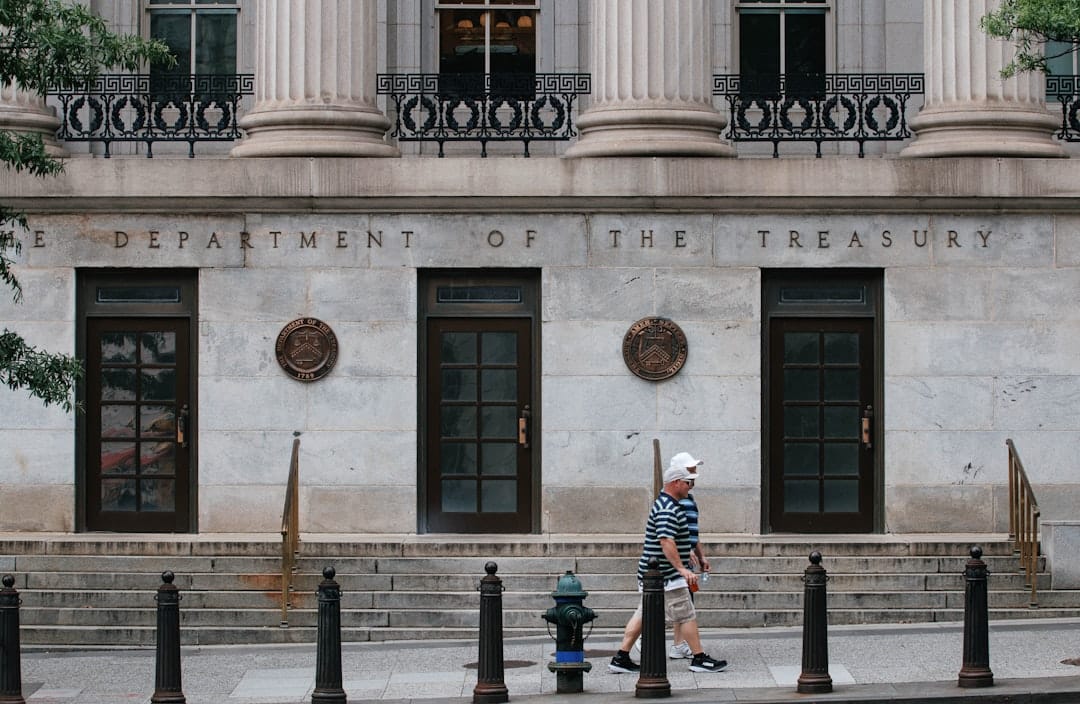
Photo by Connor Gan on Unsplash
Government bonds — debt issued by national governments — are the foundation of the global fixed-income market. They are treated by convention as the "risk-free" benchmark against which all other bonds are priced. The logic is straightforward: a government that issues debt in its own currency can, in extremis, print that currency to repay. For the largest, most creditworthy sovereigns, the probability of default is considered negligible.
The major sovereign bond markets are:
- US Treasuries: the deepest and most liquid bond market in the world, denominated in the world's reserve currency. Treasuries are issued as Treasury Bills (maturity up to one year), Treasury Notes (2–10 years), and Treasury Bonds (20–30 years).
- UK Gilts: British government bonds, named after the gilt-edged paper on which certificates were originally printed.
- German Bunds: the eurozone's benchmark sovereign, with Germany's fiscal reputation making Bund yields the reference rate for Europe.
- Japanese JGBs (Japanese Government Bonds): the world's largest sovereign bond market by domestic issuance, overwhelmingly held by domestic investors.
"Risk-Free" Is an Approximation

The assumption that developed-market government bonds are risk-free is useful but not literally true. History contains numerous sovereign defaults. Russia defaulted on its domestic rouble-denominated debt in 1998, triggering a global financial shock that contributed to the collapse of Long-Term Capital Management. Argentina has defaulted multiple times — most spectacularly in 2001, when it restructured $100 billion of debt at deep discounts. Even within the eurozone, Greece required two restructurings in 2010–2012, imposing significant losses on private bondholders.
Credit rating agencies — S&P (which began rating sovereigns formally in 1916), Moody's (founded 1909), and Fitch — assign ratings to governments just as they do to companies. A downgrade can move market yields significantly.
The Repo Market

Photo by Tötös Ádám on Unsplash
The repurchase agreement (repo) market is an essential piece of financial plumbing largely invisible to individual investors. In a repo, one party sells a government bond to another and agrees to buy it back the next day (or after a set term) at a slightly higher price. The difference is effectively the interest rate on a short-term collateralised loan.
Repo markets allow banks, dealers, and institutional investors to fund bond holdings at low cost, using government bonds as collateral. The smooth functioning of the repo market is a prerequisite for liquid government bond markets; disruptions to repo — as occurred briefly in September 2019 in the US and following the UK's mini-budget in September 2022 — can rapidly amplify financial stress.
Quantitative Easing
Quantitative easing (QE) is the large-scale purchase of government bonds by central banks, conducted with newly created central bank reserves. Introduced by the Bank of Japan in 2001 and adopted by the US Federal Reserve, Bank of England, and ECB in and after the 2008 financial crisis, QE aims to lower long-term yields and ease financial conditions when short-term policy rates are already near zero.
By removing government bonds from the market and replacing them with cash, QE pushes remaining bond prices up and yields down. Critics note that years of QE have distorted the "risk-free" price signal embedded in government bond yields, making it harder to read genuine economic expectations from the yield curve.